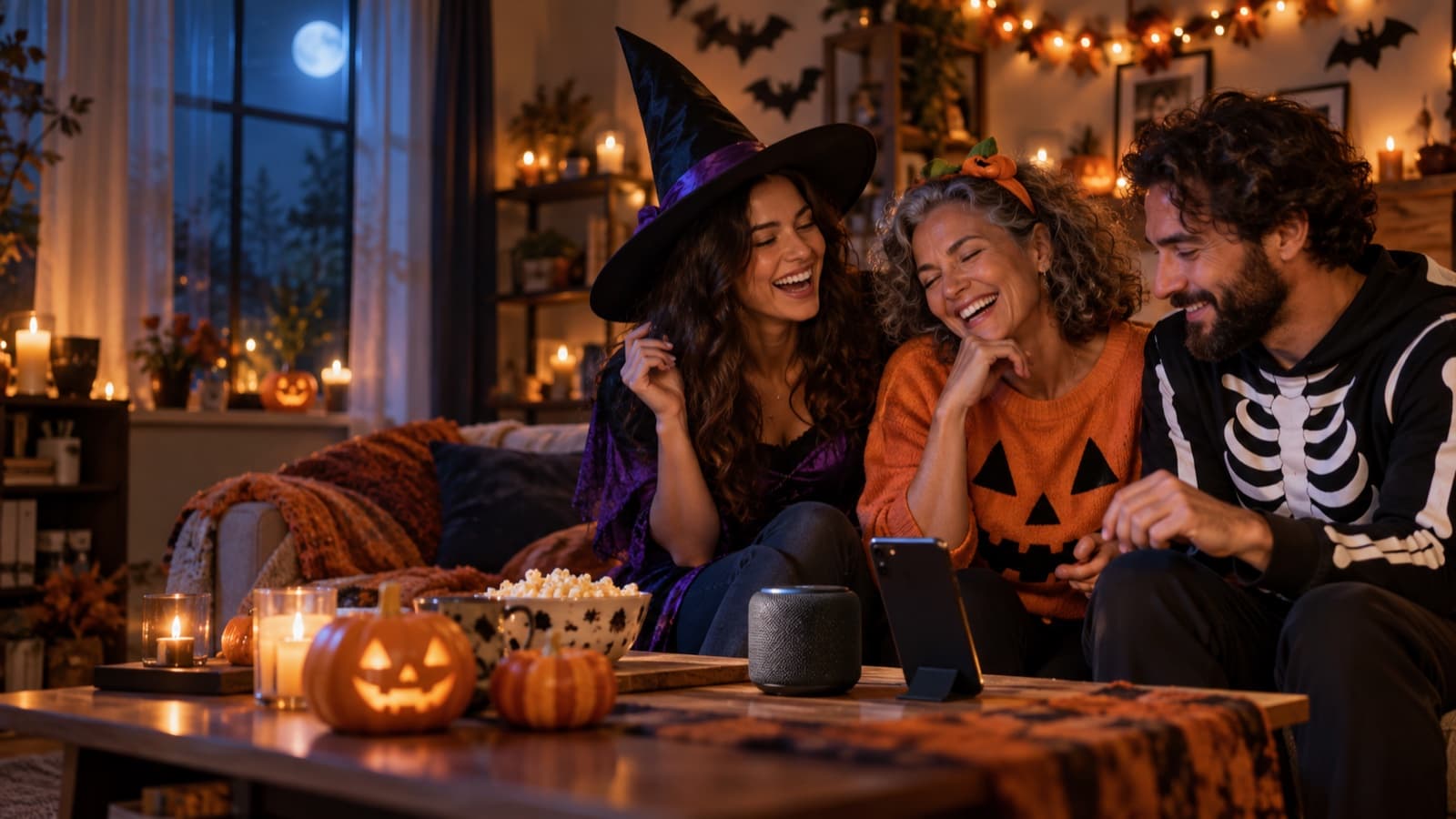
Start Halloween song ideas with the night you actually share
The most useful Halloween song ideas begin with a person and a scene, not a shelf of spooky words. Think about the friend who builds every costume by hand, the child who changes character three times before leaving the house, the dog that freezes the moment its cape goes on, or the host who turns the same living room into a different world each October. Those details give the song a reason to exist after the decorations come down.
Choose one clear purpose before you write. A party opener needs an easy hook and room for a group to laugh. A song for a child can celebrate imagination without trying to frighten them. A gift for a close friend can use private jokes, but the lyric still needs enough context for the story to make sense. The nine directions below are original prompts. Replace every example with details that are true for your listener, and do not copy lyrics or melodies from a released Halloween song.
Nine personalized Halloween song ideas for different celebrations
Pick the direction that immediately brings a real scene to mind. You can combine two related memories, such as a costume mishap and the annual party where it happened, but avoid trying to cover every Halloween at once. One complete moment usually gives the verses more shape than a timeline of disconnected references.
The homemade costume anthem
Write for the person who treats costume building like a yearly mission. Begin with the table covered in fabric, cardboard, makeup, or tape. Show the problem that nearly ruined the plan and the improvised fix that saved it. The chorus can celebrate the confidence they found once the costume was finally on. Keep the description original rather than naming a protected character, and focus on what the maker did: cutting, painting, sewing, borrowing, or laughing when the first version failed.
- Prompt
- Who made the costume, what materials took over the room, what went wrong, and how did the finished look change their mood?
- Natural sound
- Bright indie pop with a playful build and a chorus a group can repeat.
The trick-or-treat route song
Use a familiar route as the structure. Each verse can move from one porch or landmark to the next: the house with the enormous decorations, the corner where somebody always stops to trade candy, or the steep path that feels longer on the walk home. A child-friendly version should keep locations broad and avoid addresses, school names, or routines that identify where a child lives. Let the chorus return to the feeling of being together outside after dark rather than counting every piece of candy.
- Prompt
- Which safe landmarks does everyone recognize, who leads the group, and what small ritual happens before you head home?
- Natural sound
- Joyful acoustic pop or light country with a steady walking rhythm.
The party that went slightly wrong
A spilled punch bowl, a decoration that fell at the wrong moment, or a speaker that stopped working can give a funny Halloween party song its plot. Choose a mishap everyone already enjoys retelling. Make the narrator part of the trouble so the joke does not point only at one guest, then use the chorus to show how the recovery made the party better. Leave out accidents, fears, or embarrassing moments that the person involved would rather forget.
- Prompt
- What was supposed to happen, what actually happened, who helped fix it, and which sentence became the story everyone repeats?
- Natural sound
- Upbeat pop, playful country, or a light duet with conversational verses.
The cute-spooky song for a child
Build the lyric around imagination instead of danger. The moon can watch over the walk, pumpkins can grin from the steps, and a cardboard ghost can become a friendly guide. Use the child's own description of the costume or decorations when possible, then ask an adult to check names and private details before sharing. The chorus should leave the child feeling brave, included, and excited to replay the song, not challenged to prove they are unafraid.
- Prompt
- What did the child call their costume, which decoration made them smile, and what would help the song feel safe as bedtime approaches?
- Natural sound
- Light acoustic pop with a warm vocal and gentle, playful percussion.
The friend-group monster roll call
Give each friend a role through an action rather than a label. One person carries emergency safety pins, another controls the playlist, and someone else eats the candy meant for guests. A short line for each person can work if every line moves the scene forward. Bring everyone together in a shared chorus about the place, phrase, or annual promise that keeps the group returning. This approach fits a group chat reveal because each listener can recognize their part without hearing a list of compliments.
- Prompt
- What job does each friend naturally take, which inside phrase belongs to the group, and where does everyone end up by the last song?
- Natural sound
- Energetic indie pop with duet or group-style vocals.
The pet costume reveal
Keep the joke gentle and center the pet's real behavior. A dog may refuse to move in a cape, a cat may inspect the costume box and walk away, or a patient pet may cooperate only when treats appear. Do not invent human emotions the owner would find uncomfortable; describe the ears, paws, stare, escape attempt, or triumphant nap you actually saw. The song can accompany a short photo montage if the images are yours to share and the pet was comfortable during the costume moment.
- Prompt
- What did the costume look like, how did the pet react, which treat changed the negotiation, and what happened once the photos were over?
- Natural sound
- Bouncy acoustic pop or playful country with a short, memorable hook.
The Halloween movie-night song
Write about the ritual around the screen rather than retelling a copyrighted film. The interesting details may be the blanket everyone claims, the snack that disappears during the opening scene, the person who hides behind a cushion, or the debate over what is too scary. A warm chorus can turn the movie night into a song about friendship or family tradition. Refer to the chosen movie in the story brief only if it is helpful, but keep the generated lyric focused on your own room and reactions.
- Prompt
- Who chooses the movie, what snack is always present, who pretends not to be scared, and what happens after the credits?
- Natural sound
- Cozy acoustic pop, soft indie pop, or a restrained cinematic ballad.
The first Halloween together
For a couple, new family, or recently formed friend group, use the holiday as the setting for a relationship story. Mention the first costume decision, the invitation that made the night possible, or the moment a shared joke began. Keep the promise proportionate to the relationship. A light song about choosing next year's costume together may feel more honest than turning one October evening into a sweeping declaration. The specific beginning gives the chorus enough meaning without forcing the mood.
- Prompt
- How did the plan begin, which detail made the night feel like yours, and what small tradition do you want to repeat next year?
- Natural sound
- Warm indie pop, an acoustic duet, or playful R&B.
The host of Halloween song
Thank the person whose preparation makes the night work. Follow the hours before guests arrive: moving furniture, hanging decorations, testing the speaker, setting aside food for someone, or fixing a costume at the door. The chorus can name the feeling they create rather than praising them in general terms. This idea works as a surprise after the party, when the room is quieter and the host can hear that the work people missed was noticed.
- Prompt
- What did the host prepare before anyone arrived, which thoughtful detail helped a guest, and what would you like them to hear after cleanup?
- Natural sound
- Warm acoustic pop or a piano-led thank-you with a gentle lift in the chorus.
Turn a spooky song idea into a clear personal brief
Write the memory in plain sentences before thinking about rhyme. Name the listener, explain your relationship, and describe one scene with actions and objects. Then add the emotional center: celebration, friendship, courage, gratitude, or affectionate teasing. A useful brief might say, 'Our friend Nora builds our costumes every year. Last October the porch lights failed, so we finished the contest by phone flashlight. I want a funny group song that thanks her for keeping the night alive.'
Choose the point of view next. A song from one friend should use I, while a gift from the whole group can use we. If several people contribute details, ask one person to edit the final brief so the narrator does not change halfway through. Mark any name or nickname that needs careful pronunciation, and remove information that should not appear on a shareable page.
Finally, describe a broad sound rather than requesting a copy of an existing Halloween track. Useful directions include playful indie pop, joyful acoustic pop, gentle cinematic, dark-but-funny country, or a warm duet. MeloLetter creates original AI music; it does not promise a familiar melody, an artist's voice, or lyrics from a released song.
Plan the first listen before Halloween night
Match the delivery to the lyric. A loud, funny song can open a costume party or accompany a group video. A thank-you for the host may work better after guests leave. A song for a child should be reviewed by an adult and played in a setting where the child can listen without being placed on display. Give the song one short sentence of context, then let the audio carry the moment.
Check the complete lyric, names, and pronunciation before the reveal. After generating, listen through both versions and keep an offline MP3 if the moment depends on a speaker or unreliable connection. Open the gift page on the same kind of phone the recipient will use. Anyone who receives a published link may be able to pass it on, so use only photos and personal details that belong in that audience.
The editable lyric draft and your first 30-second preview of both personalized versions are free. Complete playback, MP3 downloads, one included regenerate, and the shareable gift page require a paid song pack. Leave time to review the result; MeloLetter does not promise a particular completion time for a timed event.
Questions about personalized Halloween songs
What details make a good personalized Halloween song?
Use a real listener, one setting, a memorable costume, a harmless mishap or tradition, and the message the chorus should carry. Concrete actions such as repairing a cape or lighting a porch give the lyric more character than a list of spooky objects.
Can I make a Halloween party song for a whole group?
Yes. Give each person a brief action or role, then bring the group together around one shared place, phrase, or tradition. Review the jokes with the likely audience and remove anything that singles someone out unkindly.
Can I use the melody or lyrics of a famous Halloween song?
MeloLetter creates original AI music and does not promise an existing melody, copyrighted lyric, or artist voice. Describe the mood and broad musical style you want, then use your own names, scenes, and words.
Is the Halloween song generator completely free?
The editable lyric draft and the first 30 seconds of both personalized song versions are free for your first song pack, with no card required. Payment unlocks the complete recordings, MP3 downloads, one included regenerate, and a gift page.
Choose the Halloween scene they will recognize first
A personalized Halloween song works when the listener recognizes the first true detail and knows the song belongs to their night. Start with the homemade cape, the porch that went dark, the pet that would not move, or the snack that never survives the opening scene. Keep the story focused, choose a sound that fits the audience, and review every name before you share it.
The season supplies the pumpkins and paper bats. Your memory supplies the reason to press play again next October.