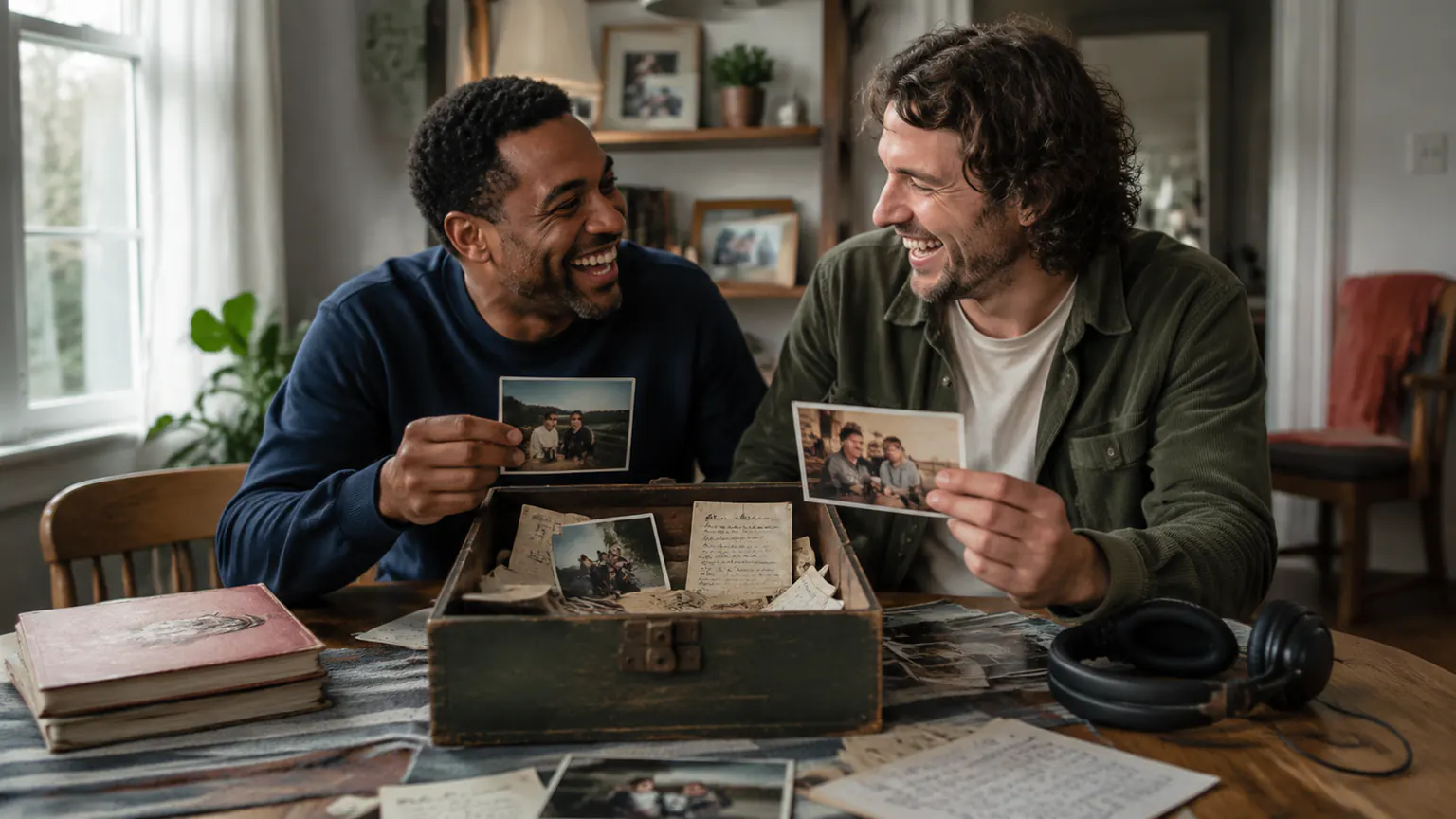
A best friend song needs the history behind the compliment
Useful best friend song gift ideas begin with the evidence behind the friendship. The lyric might show the night they answered without asking for an explanation, the repeated lunch order, the move they helped you survive, or the joke that still works after years. Saying someone is loyal or funny gives a conclusion. A scene lets the listener remember why that conclusion is true.
Decide what the song is for before gathering every story. A birthday song can celebrate who they have become. A thank-you can name support that usually goes unspoken. A farewell can preserve a shared chapter without making the next one sound like an ending. A wedding gift can recognize the friend who witnessed the relationship from the beginning. One purpose makes it easier to choose what belongs in the verses.
Keep the friendship's natural language. If you rarely speak formally, a lyric full of destiny, soulmates, and eternal devotion may feel borrowed even when the intention is sincere. Humor, practical help, blunt honesty, and familiar phrases can carry affection. Save one direct emotional line for the chorus, then let the details around it earn the moment.
Nine best friend song gift ideas with usable prompts
Choose the direction that produces clear scenes rather than the one that sounds most impressive. You do not need to use every chapter of the friendship. Two or three moments, one repeated trait, and a present-day message can hold a complete song when the details are specific.
The day-we-met version
Open with the first detail you noticed, even if neither person understood that the friendship had started. Move to the moment you became the person each other called first. The chorus can contrast the accidental beginning with the reliable place the friendship holds now.
- Prompt
- Where did you meet, what did you misread about each other, and when did the friendship become real?
- Natural sound
- Bright acoustic pop or warm indie pop.
The ordinary rescue song
Focus on care that did not look dramatic: bringing food, waiting outside, checking in after everyone else stopped, helping with forms, or sitting quietly through a bad evening. Avoid turning the friendship into a debt. The chorus can thank them for making difficult days less solitary.
- Prompt
- Which small act arrived at exactly the right time, and what did it make possible?
- Natural sound
- Piano, gentle soul, or restrained acoustic pop.
The inside-joke timeline
Choose three jokes from different years and describe the situations that created them. Give enough context for the lyric to remain a story, but do not explain every punch line. Put the jokes in the verses and use the chorus for the sincere meaning underneath: this is the person with whom you can still laugh after the plan falls apart.
- Prompt
- Which joke has survived the longest, and what happened the first time it was said?
- Natural sound
- Upbeat indie pop, funk-pop, or playful acoustic music.
The different-lives-same-call song
Use this for friends in different cities, countries, careers, or family stages. Show the separate routines, then name the call, group chat, annual trip, or shared ritual that keeps the friendship current. The lyric should make room for growth rather than treating change as betrayal.
- Prompt
- What habit proves the friendship still has a place in both of your present lives?
- Natural sound
- Soft indie pop or a conversational duet.
The things-you-taught-me song
Build each verse around something learned by watching: how to leave a bad situation, apologize clearly, host people, ask for help, laugh at a mistake, or hold a boundary. Show the lesson in action instead of turning the song into advice. The chorus can reveal where that lesson appears in your life now.
- Prompt
- What do you do differently because this friend once showed you how?
- Natural sound
- Reflective folk-pop, piano, or a warm soul ballad.
The birthday chapter song
Choose one scene from the year just finished, one older memory that shows how much has changed, and one realistic wish for the next year. This creates a birthday structure without listing ages or generic wishes. Let the final verse point toward something you will actually do together.
- Prompt
- Which moment from this year would they want to remember when the next birthday arrives?
- Natural sound
- Celebratory acoustic pop or a light duet.
The farewell without goodbye song
For a move, graduation, or job change, preserve the chapter that is ending while naming how the friendship will continue. Use one place you are leaving, one ritual worth protecting, and one practical plan. Avoid promising that nothing will change; a believable commitment is more comforting than denial.
- Prompt
- Which routine will you miss, and what specific action will keep the friendship active?
- Natural sound
- Hopeful piano-pop or cinematic acoustic music.
The wedding witness song
Write from the perspective of the friend who saw the relationship take shape. Include what you genuinely observed and how your friend changed, but do not claim private thoughts or tell the couple's story for them. End with support for the life ahead rather than advice about how to live it.
- Prompt
- Which moment made you realize the relationship mattered to your friend?
- Natural sound
- Warm acoustic pop, soul, or a gentle celebratory ballad.
The friendship field guide
Collect the recognizable rules of being friends with this person: the order they always make, the phrase that means they need help, the place they choose when plans fail, or the item they inevitably forget. Frame the details with affection, not mockery. The chorus can say that knowing these small truths is part of being known in return.
- Prompt
- Which three habits would let a listener identify your friend without hearing their name?
- Natural sound
- Playful pop, acoustic funk, or upbeat indie music.
What to put in a best friend song without making it generic
A strong brief contains contrast: what happened, what your friend did, and what you understand because of it. Write ordinary prose first. The table below turns broad praise into material that can support a verse without forcing you to invent rhyme or drama.
| Broad idea | Evidence to collect | Question that finds the detail |
|---|---|---|
| They always show up | One inconvenient time they came anyway | Where were you, what time was it, and what did they bring or do? |
| They make you laugh | A failed plan that became a repeated joke | What went wrong, and which phrase still brings the moment back? |
| You grew up together | One old place and one present habit | What has changed around you, and what still feels immediately familiar? |
| They tell the truth | A difficult conversation and its effect | What did they say carefully, and what choice became clearer afterward? |
| You can be yourself | A moment when no performance was required | What could you admit, wear, say, or leave unfinished around them? |
Use names, nicknames, and exact phrases selectively. One line in the right place creates recognition; repeating a name in every chorus can make the personalization feel like a label. If a detail requires a paragraph of explanation, choose a cleaner scene or give the lyric enough context to stand on its own.
Keep private jokes funny and difficult memories fair
Friendship songs can go wrong when surprise is treated as permission. A joke may be beloved in a private chat and uncomfortable at a party. A difficult season may explain the friendship and still belong to someone who is not receiving the gift. Decide who will hear the song before choosing the material.
Avoid exposing health information, money problems, family conflict, breakups, sexuality, workplace issues, or another person's secret unless everyone involved has already agreed that the detail can be shared in that setting. You can preserve the emotional truth without naming the private event. A line about staying through a hard winter may be enough when the facts are not yours to publish.
Humor should let the recipient laugh with the song. Remove jokes about appearance, insecurity, addiction, grief, dating history, or a mistake they still regret. If the funny line works only because a room can laugh at the person, it is not a generous gift. Use your own embarrassing moment instead, or choose a shared failure where nobody becomes the target.
Build a best friend song brief in five decisions
The brief does not need polished lyrics. It needs enough truth for a lyric draft and enough boundaries to keep the result comfortable. Make these five decisions before choosing the final sound.
Name the occasion and listener
State whether the song is for a birthday, wedding, graduation, move, thank-you, or an ordinary day. Note whether the friend will hear it alone or with other people. The setting changes how private and playful the language can be.
Choose three scenes with different jobs
Use an origin scene, a moment that proves the friend's character, and a current or future scene. This gives the song movement instead of three examples that all repeat the same compliment.
Write the chorus message in your normal voice
Finish one sentence: after hearing this, I want my friend to know that... Keep the wording you would use in a note. The lyric can shape it later, but the meaning should remain yours.
Mark the material that stays out
List private names, conflicts, health details, other people's stories, or jokes that do not belong in the gift. Clear exclusions are as useful as creative prompts when the friendship has a long history.
Pick music that sounds like the friendship
Choose bright, tender, funny, understated, or celebratory before naming a genre. Then think about what the recipient actually listens to. The sound should support the words rather than turn the friendship into a style they would never choose.
Choose a delivery that suits your friend's comfort
A public premiere is not automatically more meaningful. Send a vulnerable thank-you privately if your friend dislikes attention. Play an upbeat birthday song with the group when the lyric is generous and the recipient enjoys being celebrated. For a move or graduation, pair the song with a short note that says which chapter you wanted to preserve.
Preview the complete page on a phone, check the title and lyrics, and keep an offline audio copy for venues or trips. Give the recipient one sentence of context instead of a speech. A simple line such as 'I wanted to keep the ordinary parts of our friendship somewhere' lets the song begin without telling them how they are supposed to react.
Frequently asked questions about best friend song gifts
What if my friendship is more funny than emotional?
Use the humor that already belongs to the friendship, then give the chorus one honest sentence about what the person means to you. The song can stay light without avoiding the reason you chose to make it.
Can several friends contribute memories?
Yes. Collect one concise scene from each person, verify the facts, and choose a consistent group voice. Use only memories the recipient would be comfortable hearing in the planned setting.
How do I write about a friendship that survived conflict?
Focus on the repair both people recognize: returning to the conversation, apologizing, changing a habit, or respecting a boundary. Do not use the gift to reopen blame or announce forgiveness the other person did not request.
Start with the story your friend would identify immediately
The best best friend song gift ideas are built from recognition. Choose one scene that proves the friendship, one detail that makes both of you laugh, and one sentence you rarely say directly. Keep private stories private and let the lyric sound like the way you already speak to each other.
MeloLetter's best friend song page lets you enter those details and review a free lyric preview before creating the full songs. Use the preview to correct the facts, remove anything that would feel uncomfortable in the delivery setting, and strengthen the lines your friend could identify without hearing their name.