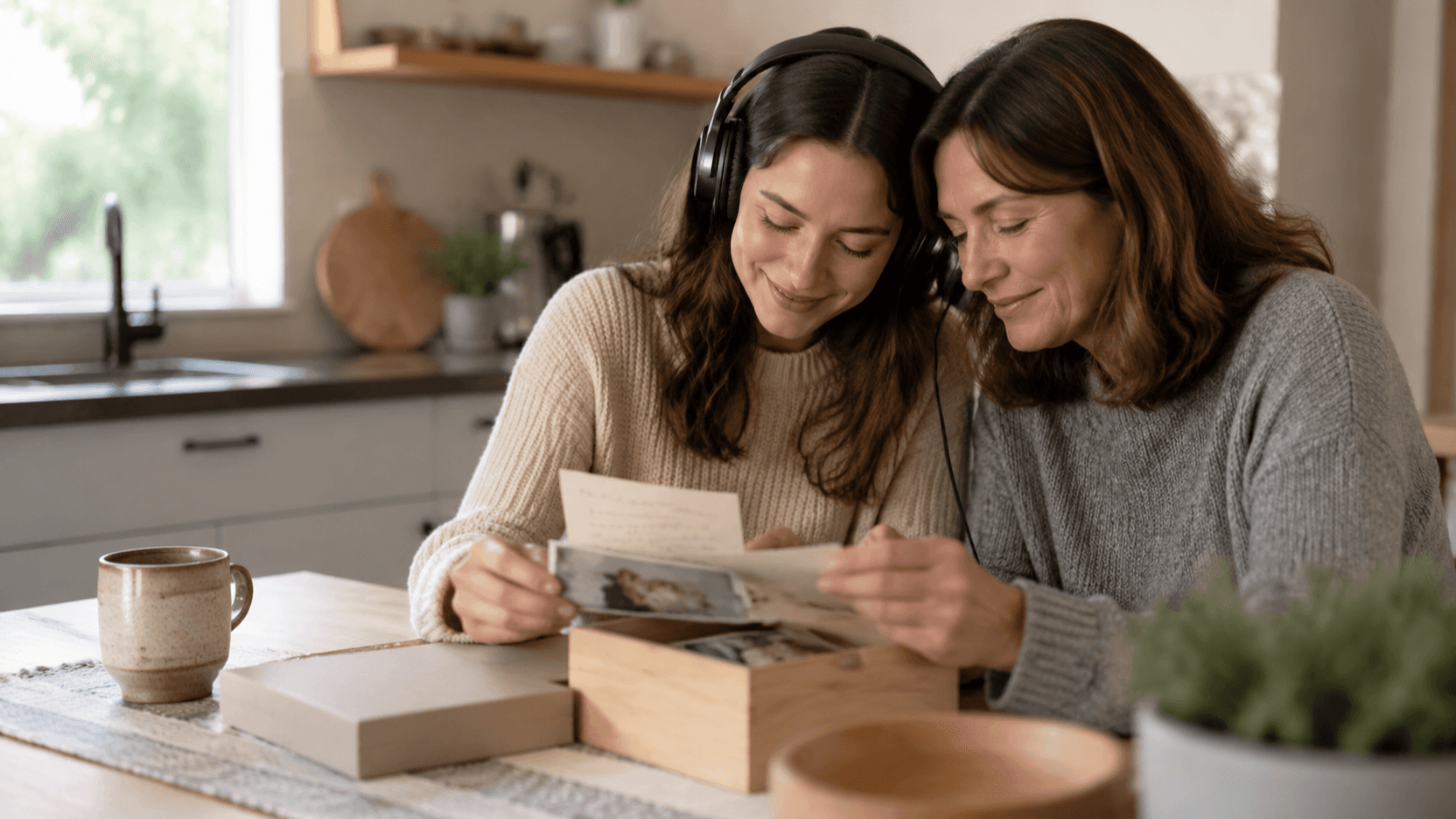
An AI song gift for Mom needs evidence, not bigger praise
The most useful way to create an AI song gift for Mom is to begin with proof. Write down three moments she would recognize immediately, one quality those moments reveal, and one sentence you have wanted to tell her. That material gives the lyric a person, a place, and a reason to exist. Starting with a genre or a rhyme is easier, but it often produces a polished song that could belong to any mother.
Evidence can be small. It might be the porch light she left on, the fruit she cut before an exam, the recipe card with notes in the margin, or the way she called after every difficult appointment without making the conversation about herself. These details carry more emotional weight than a verse full of words such as amazing, selfless, and strong because they show what those qualities looked like in your life.
You are not trying to summarize an entire relationship. A song has room for a few scenes and one clear conclusion. Choose the memories that support the message you want her to hear now: thank you, I finally understand, I am proud to be your child, I miss our ordinary days, or I will carry what you taught me. The narrower message usually makes the finished gift feel more generous, not less complete.
Gather details that only your mother would recognize
Before drafting lyrics, make a short story inventory. Plain notes are better than premature poetry because they make it easier to check accuracy. The four categories below are enough for most songs; one strong detail in each category gives the verses a natural path from memory to meaning.
| Story material | Question to answer | Example of useful evidence |
|---|---|---|
| A visible routine | What did she do repeatedly? | She warmed dinner after late practice and sat nearby until you finished |
| A specific place | Where does her presence feel strongest? | The passenger seat on the school run or the kitchen before everyone woke |
| Her language | What phrase, nickname, or advice sounds like her? | A short sentence she used when you were nervous |
| A change in you | What do you understand now that you missed then? | The boundary, habit, or kind of courage you learned by watching |
Build the song brief in five decisions
A good brief tells the writing tool what is true, what the song should accomplish, and what should remain private. Complete these decisions in order. They prevent the sound direction from taking over before the story is clear.
Name the occasion and point of view
Say whether the gift is for her birthday, Mother's Day, a thank-you, a family milestone, or no formal occasion at all. Then state who is speaking: one child, several siblings, a partner, or the whole family. A consistent point of view keeps the lyric from drifting between I and we.
Choose three scenes with actions
Select an opening memory, a moment that shows what she did, and a present-day scene that reveals what it means now. Include what happened, where it happened, and one object or phrase. A scene such as waiting together beside a vending machine gives the lyric more to work with than saying she was always there.
Write the chorus message without rhyme
Finish this sentence in your normal voice: after hearing the song, I want Mom to know that... Keep one answer. The chorus might thank her for making home feel steady or admit that you understand her sacrifices differently as an adult. The verses should earn that statement.
Set emotional and privacy boundaries
Say whether the tone should be tender, hopeful, playful, restrained, or celebratory. Mark any health history, family conflict, loss, nickname, or apology that should stay out of a public setting. Personal does not have to mean exposed.
Choose music she would actually enjoy
Think about what she plays in the car or at home. Acoustic pop can keep a story conversational; piano leaves room for gratitude; soul or R&B can suit a warmer vocal; country can hold family places and routines. The genre should serve her taste and the message, not demonstrate how elaborate the generator can be.
Four story directions for a personal song for Mom
If the story still feels too broad, choose one of these directions. Each gives the song a single organizing idea while leaving room for details that belong to your family.
The care I noticed late
Build the verses from work that once seemed ordinary: packed lunches, repaired costumes, waiting in the car, checking the weather before a trip, or remembering the detail everyone else forgot. Let the chorus acknowledge what you understand now.
- Prompt
- Which ordinary task do you now recognize as a form of love?
- Natural sound
- Intimate piano or warm acoustic pop.
The phrase I still carry
Open with a sentence she often used, then show two moments when it helped. The final verse can reveal how you repeat the same advice to yourself or someone younger. Use the exact phrase sparingly so it feels like recognition rather than a slogan.
- Prompt
- What did she say when you were frightened, disappointed, or about to begin?
- Natural sound
- Reflective folk-pop or a restrained soul ballad.
The home she made
Describe home through sensory evidence: a hallway light, music during cleaning, a Sunday pan on the stove, a garden chair, or the sound of her keys. The chorus can explain that home became a way of being cared for, not merely an address.
- Prompt
- Which sound, smell, room, or ritual brings her presence back immediately?
- Natural sound
- Acoustic pop, light country, or soft indie pop.
The strength that looked quiet
Choose actions that showed steadiness without turning hardship into spectacle. She may have begun again, protected a boundary, kept a promise, asked for help, or stayed kind under pressure. Keep the focus on what her choices taught you.
- Prompt
- Which difficult season revealed her character through one concrete action?
- Natural sound
- A gradual piano ballad or cinematic acoustic arrangement.
Review the lyric before the music makes it feel finished
Read the lyric without a backing track. Check names, pronouns, timing, and who witnessed each memory. Remove any line that invents a feeling for your mother or claims to know what she never said. If changing her name would let the song fit another family, replace one broad compliment with an observable detail.
Then read the words aloud. A line can rhyme and still sound unlike you. Rewrite formal phrases in language you would use in a card or conversation. Save names and nicknames for moments where they add recognition; repeating them in every chorus can make a sincere song feel mechanically personalized.
Match the delivery to the lyric. A playful birthday song can work in a family room, while a thank-you that mentions grief or sacrifice may deserve a private listen. Preview the final link on her likely device, check the volume, and keep a downloaded copy if the song will be played during a timed event or somewhere with unreliable reception.
Frequently asked questions about AI song gifts for Mom
Do I need to write the lyrics myself?
No. You can prepare the memories and message in ordinary sentences, then use an AI writing tool to shape the lyric. Review the draft for accuracy, privacy, and language you would genuinely use before generating the music.
What if I do not have one dramatic story?
Use repeated, ordinary care. Three small scenes from different years often say more than one major milestone because they show a pattern your mother will recognize as her own life.
Can the song be funny without losing the emotion?
Yes. Put family jokes and light details in the verses, then give the chorus one sincere message. Avoid jokes that embarrass her or require a long explanation for other listeners.
Start with the moment she would recognize first
An AI song gift for Mom becomes personal when the technology is given specific, honest material. Begin with one scene she can picture, add two details that show a pattern of care, and let the chorus say the sentence those memories have earned. The result does not need to cover every year. It needs to sound true when she hears the first verse.
MeloLetter's Mom song page lets you turn that short brief into a free lyric preview before deciding whether to create the complete songs. Use the preview as an editing stage: correct the facts, remove anything too private, and keep the lines that sound like your relationship.